
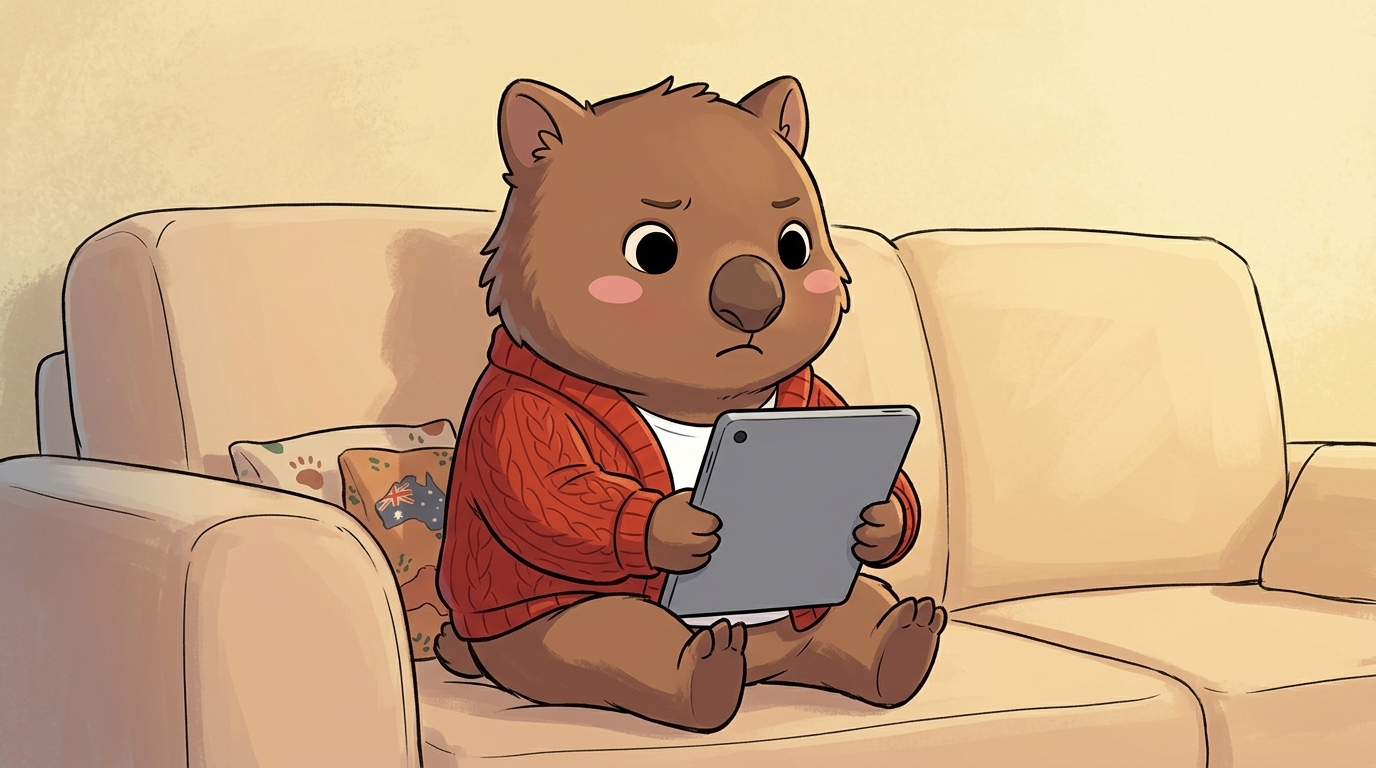
Why kids stay quiet (it's not what you think)
The official advice is “tell a trusted adult”. The lived reality, for kids ages 5 to 8, is that they often don’t. Not because the message hasn’t landed, but because of four very specific reasons that rarely make the parenting articles. The eSafety Commissioner’s Inappropriate content: factsheet names the same gap from the school side; the kid-facing version I saw something online I didn’t like is worth bookmarking for the kid’s own iPad too.
| What's actually in the kid's head | The parent move that defuses it |
|---|---|
| “I'll get in trouble for being on the iPad / on YouTube / on that game.” | Take "you're never in trouble for telling" out of the abstract: say it in their actual everyday language, every week, before anything happens. |
| “They'll take the iPad away.” | Decouple consequence from disclosure. Be explicit: "the iPad doesn't get taken away because you told. It might get taken away because of what was on it — but YOU don't get punished for telling." |
| “I don't know the words for what I saw.” | This is the under-8 reality. They can't name the content. Train them to tell you the FEELING ("my tummy felt yuck") instead. The feeling is what you act on. |
| “Mum looked busy / Dad was on a call.” | Have a code word the kid can say in front of anyone — at the supermarket, in the car — that means "I need to tell you something about a screen and I need you NOW." Pick the word together this week. |
“I'll get in trouble for being on the iPad / on YouTube / on that game.”
Parent move:Take "you're never in trouble for telling" out of the abstract: say it in their actual everyday language, every week, before anything happens.“They'll take the iPad away.”
Parent move:Decouple consequence from disclosure. Be explicit: "the iPad doesn't get taken away because you told. It might get taken away because of what was on it — but YOU don't get punished for telling."“I don't know the words for what I saw.”
Parent move:This is the under-8 reality. They can't name the content. Train them to tell you the FEELING ("my tummy felt yuck") instead. The feeling is what you act on.“Mum looked busy / Dad was on a call.”
Parent move:Have a code word the kid can say in front of anyone — at the supermarket, in the car — that means "I need to tell you something about a screen and I need you NOW." Pick the word together this week.
The four sentences that break the silence
These are the four things to actually say, in order, in the first ninety seconds after a kid tells you something on a screen made them feel yuck. Practice them out loud once tonight when nothing has happened — the muscle memory carries you through the moment something has.
“You're not in trouble. Tell me what made your tummy feel yuck.”
Why:Removes punishment risk + reframes from content ("what did you see") to body feeling ("what did you feel"). The feeling is what a 5-year-old can name.
“I'm proud you told me. That's the bravest thing.”
Why:Names telling as the achievement. If telling = praise, the next time it happens they'll tell sooner. If telling = interrogation, they'll go quiet for life.
“I'm going to look at it with you, and we'll close it together.”
Why:Models the fix (close the tab / hand back the device). The kid learns the action. Your face stays calm — that's what they'll remember most.
“What you saw is not your fault. It's the screen's fault.”
Why:Removes shame, names the bad-thing-that-happened as something the device did, not something the kid did. Ages 5–8 attribute fault to themselves automatically.
What to do tonight (3 things, 5 minutes)
Don’t wait for an incident to set the rails. Three small actions tonight that mean the first incident — when it comes — has somewhere to land:
- Tonight 1
Pick the code word
One word the family uses if they need an adult NOW about a screen. Out loud, at the dinner table, agreed by everyone, written on the fridge.
- Tonight 2
Practice the four sentences
Say them out loud once tonight, even with no incident. The kid hears "you're not in trouble for telling" before they need it.
- Tonight 3
Move charging out of bedrooms
All devices charge in the kitchen overnight from tonight. Most yuck-content discoveries happen alone in bed. Removing the lonely-late-night exposure removes most of the problem.
What to do after they’ve told you
Most parents handle the disclosure well and then over-handle the aftermath. The next 24 hours matter as much as the conversation itself.
- Close it together, then change topic.The fix shouldn’t become the event. After you close the tab, do something physical for ten minutes — kick a ball, draw, eat something. The body settles faster than the mind.
- Don’t debrief at bedtime. Bringing it up before sleep replays the content in their head. Talk about it next morning at the breakfast table if they need to.
- Tell the other parent / carer in front of the kid.“Tilly was so brave today, she came and told me about something on the iPad and we sorted it together.” Models that telling is celebrated, not hidden.
- Check in three days later.Casually. “Hey, you OK with the iPad still?” Most kids will be fine. Some will use the second opening to say more.
What to avoid (please)
Four common parent reflexes that will guarantee the kid doesn’t tell you next time. Not because the parent is wrong to feel them — but because the kid will read the reaction instead of the rule.
| Avoid | Do this instead |
|---|---|
| "How could you go on that website?!" | "Tell me what made your tummy feel yuck." The kid wasn't looking for it. Most yuck content arrives via autoplay, related-videos, or an ad in a free game. |
| Confiscating the device on the spot | Sit down with the kid, look together, close the tab together. Punish the disclosure once and they'll never disclose again. |
| “Forget about it, you'll be fine.” | "That looked scary. It's gone now. We'll talk about it again later if you need to." Acknowledge + name the feeling + leave the door open. |
| Re-watching the content to "check what they saw" | If you must verify (e.g. for a report), do it later, alone. Showing the kid you're now upset doubles their distress. |
Avoid
"How could you go on that website?!"
Do this instead
"Tell me what made your tummy feel yuck." The kid wasn't looking for it. Most yuck content arrives via autoplay, related-videos, or an ad in a free game.
Avoid
Confiscating the device on the spot
Do this instead
Sit down with the kid, look together, close the tab together. Punish the disclosure once and they'll never disclose again.
Avoid
“Forget about it, you'll be fine.”
Do this instead
"That looked scary. It's gone now. We'll talk about it again later if you need to." Acknowledge + name the feeling + leave the door open.
Avoid
Re-watching the content to "check what they saw"
Do this instead
If you must verify (e.g. for a report), do it later, alone. Showing the kid you're now upset doubles their distress.
When to escalate (and where to call)
If what your child saw was distressing, illegal, or specifically targeted at them — these Australian services are free, confidential, and built for this exact moment. Save the numbers in your phone now, not later.
Kids Helpline · 1800 55 1800
Free, 24/7. Counsellors trained for ages 5–25. The kid can call themselves; the parent can call too.
eSafety Commissioner — report
Report illegal or seriously harmful content (image-based abuse, cyber-bullying, child sexual abuse material). They take it down.
ThinkUKnow (AFP-led)
AFP-run advice on grooming, image coercion, and what to do if something has actually happened to your kid.
In immediate danger: call 000. For mental-health crisis: Lifeline 13 11 14.